


International Diploma Features
Teaching methods
APPROACHES to TEACHING
Based on Inquiry
Inquiry-based
Focus on Conceptual Understanding
Develop in Local and Global Contexts
Learning and developing within local and global contexts
Focused on Effective Teamwork and Collaboration
Emphasis on effective teamwork and collaboration
Differentiated to Meet the Needs of All Learners
Differentiated instruction based on learners' needs
Informed by Assessment
Adjust teaching based on assessment results
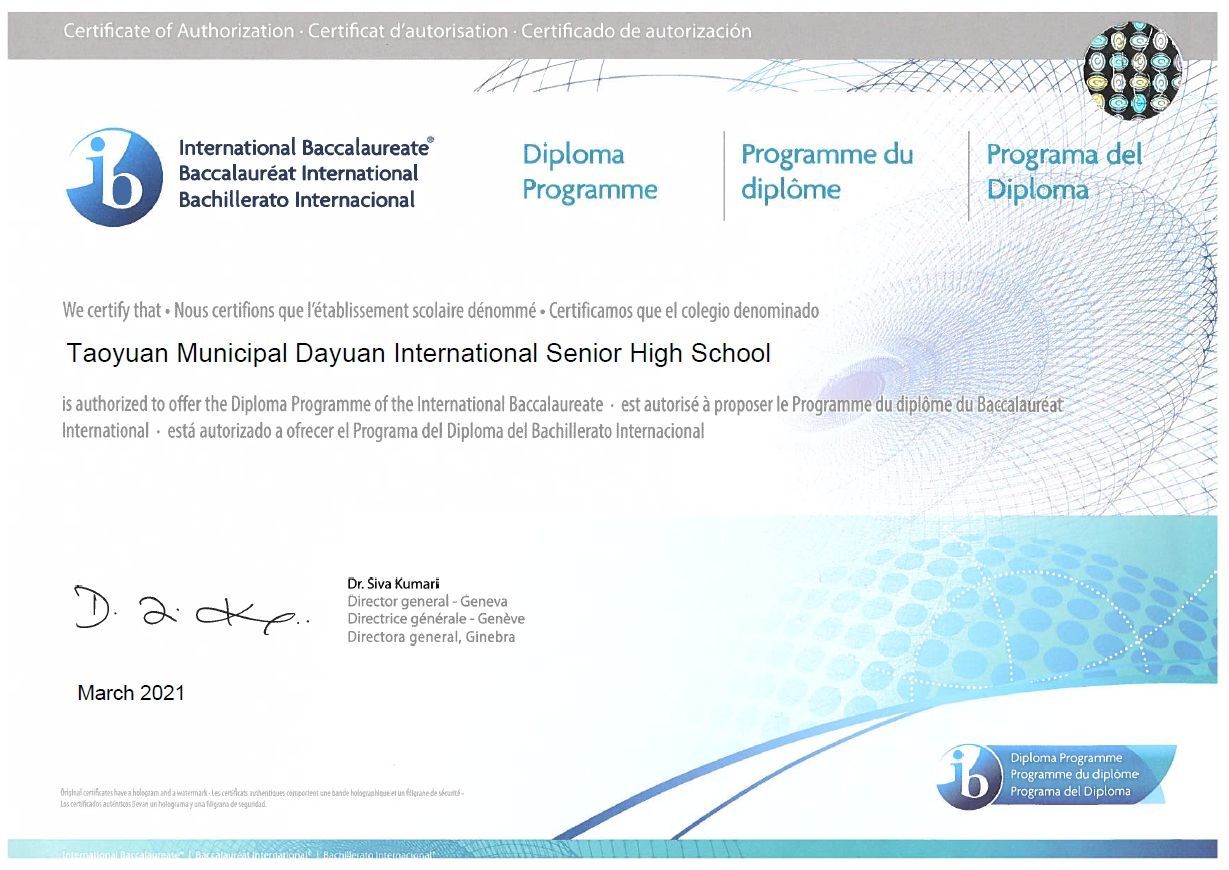
International Diploma
IB DIPLOMA PROGRAMME
The IB program is student-centered, encouraging inquiry, intercultural understanding, and respect for differences. Through an integrated curriculum and a hands-on learning process, students develop holistically in academics, character, and social engagement. Our school's IB program emphasizes bilingualism and interdisciplinary thinking, guiding students to extend their learning into the real world and become impactful global citizens.
The IB Diploma Programme nurtures inquisitive, open-minded, and compassionate learners. Its interdisciplinary and inquiry-driven approach fosters academic excellence, character growth, and social responsibility. Our IB curriculum emphasizes bilingual proficiency and interdisciplinary thinking, guiding students to connect classroom learning with real-world impact as responsible global citizens.
Am I a good fit for the International Baccalaureate Diploma Programme (IBDP)?
Is IBDP right for you?
Please read the following questions carefully and use them as a basis for evaluation.
Please read the following questions and do self-evaluation.
Q3
I have good Chinese and English skills, and can conduct daily English conversations; I can also read simple English articles and write short English essays. (Except for Chinese courses, all other subjects are taught in English. It is recommended that my English level be at least B1 and my Chinese level at least A2.)
I can have daily conversations with others in Mandarin and English, read simple English texts, and write short English essays.
(Except for Chinese courses, other subjects are learning in English. It is recommended that English proficiency should be at least B1 level and Mandarin should be at least A2 level.)
Q4
I rarely attend tutoring classes. I prefer to spend my time exercising, reading, engaging in arts and cultural activities, or doing other things that interest me, and I'm willing to put in the corresponding effort for these activities.
I seldom go to cram school. Instead, I hope to spend time on sports, reading, art activities or whatever I am interested in, and I am willing to make the effort.
Q5
I am not afraid to express my thoughts and communicate with others. When I have different opinions from my teachers and parents, I will try to express my thoughts.
I am not afraid to express my opinions and communicate with others. When I have different opinions from my teachers’ and parents’, I will try to voice my objections.
Q6
Besides studying, I will pay attention to current social events and global issues, and I will do my part to contribute to these issues whenever I have the ability and opportunity.
In addition to learning, I will pay attention to current social affairs and global issues. If possible, I will do my part to make a difference.
Q7
I am able to honestly face my learning situation and adjust my learning methods and mindset accordingly. I do not compare myself with others and focus on my own learning and growth.
I can tackle my learning situation and adjust my learning style and attitude appropriately. I focus on my own learning rather than compare myself with others.